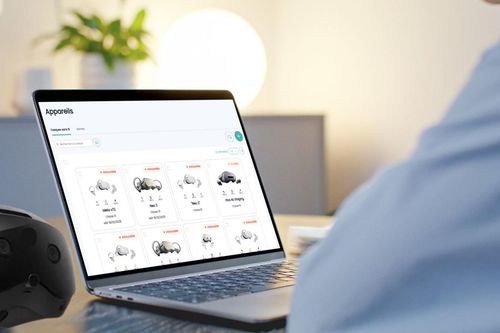
Managing VR headsets at scale: the XR MDM solution
Managing dozens of VR headsets in your company? An MDM lets you configure, secure and supervise them from a single interface — and INVERSIVE combines CMS and MDM.
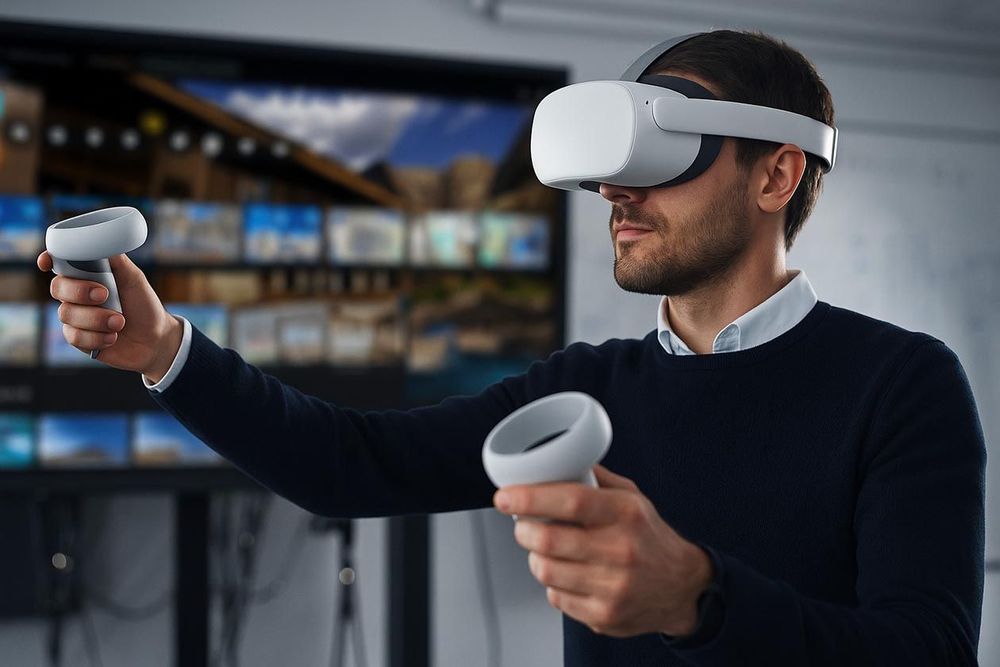
As XR (extended reality) — VR (virtual reality), AR (augmented reality) or MR (mixed reality) — takes on a growing role in professional environments, managing devices and content becomes a central question.
Whether for immersive training, HR onboarding or sales demos, VR headsets are increasingly used in companies. Yet few organizations anticipate the technical issues that come with deploying them at scale.
This is exactly where an MDM (Mobile Device Management) comes in: an essential tool for efficiently managing a VR headset fleet.
What is an MDM in the XR world?
MDM, or Mobile Device Management, is a software solution for remotely administering a fleet of mobile devices. In XR, that mainly means standalone headsets, whose best-known manufacturers are Pico, HTC Vive and Meta with its Quest range. With an MDM, companies can configure, secure, monitor and update all their headsets from a single centralized interface. It removes the time-consuming manual handling of each device and keeps deployment smooth and under control, even at scale.
Why build an MDM into your XR strategy?
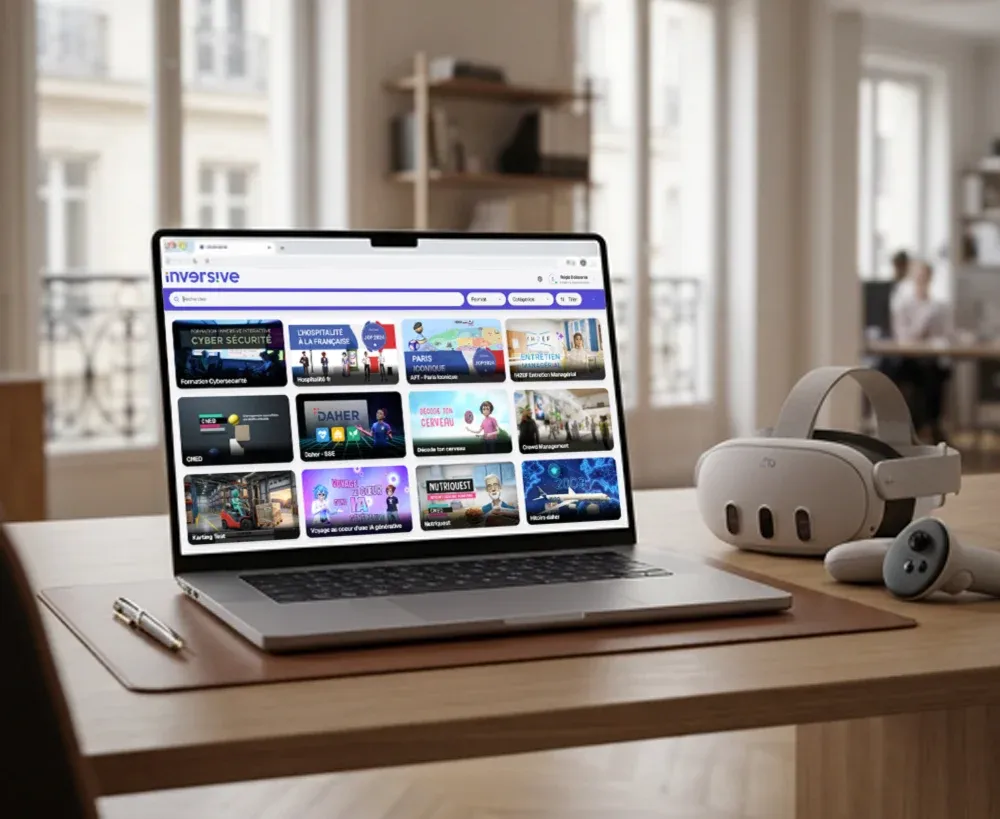
One of the first benefits of an MDM is the ability to deploy XR content (360° video, applications) remotely. In a few clicks, you can make a VR experience available on every one of your headsets, wherever they are. That makes immersive campaigns far easier to run across multiple sites, and version updates no longer require plugging in each device one by one. The INVERSIVE platform, which centralizes and distributes multi-format immersive content (extended reality: virtual reality, augmented reality and mixed reality), acts as an accelerator: XR content is deployed, updated and launched without friction.
The second key advantage is security. Because XR headsets mostly run on Android, they are exposed to the same risks as any unmanaged smartphone or tablet. An MDM lets you lock access to the settings, block the installation of third-party apps, or switch on a kiosk mode that keeps the user inside a controlled experience. If a device is lost or stolen, you can even locate it, lock it or wipe all its data remotely. That layer of security is essential as soon as your immersive content has strategic value, or when end users have no technical support on hand.
Another strength of an MDM is configuration consistency. Every headset can be set up against a common policy: language, Wi-Fi connection, specific permissions, automatic launch of an application at startup, and so on. That guarantees a consistent user experience while cutting down errors and technical incidents. For IT teams and XR project managers, it saves a considerable amount of time.
Finally, an MDM gives you full visibility over your device fleet. You can track battery levels, the version of the applications installed, network connections and usage time. That monitoring lets you step in quickly when something goes wrong, and also analyze how your immersive content is really used so you can adjust your deployment strategy.
A complete ecosystem: CMS & MDM
It is worth noting that an MDM does not manage your content: it manages XR devices (VR, AR & MR). Unlike traditional approaches that force you to wire several technical tools together, INVERSIVE chose integration. The platform centralizes the distribution of immersive content (like a CMS) and the technical management of headsets (like an MDM) in one single interface. That makes INVERSIVE a solid reference among virtual reality solutions.
Who really needs an XR MDM?
There is no shortage of use cases. A company training hundreds of employees in VR, a school deploying immersive content in the classroom, a communications agency managing headsets for several clients, and so on. All of them need centralized, secure control. The MDM then becomes a cornerstone, guaranteeing the scalability, the security and the smooth running of their XR projects.
Conclusion: the MDM, the invisible pillar of your XR deployments
Without an MDM, a large-scale XR project quickly turns chaotic. And without an immersive CMS, managing content quickly becomes a headache. That is why INVERSIVE built a platform that combines both. No more juggling vendors or manually connecting different solutions: with INVERSIVE, you get a secure, integrated and scalable XR ecosystem, from content creation to secure deployment.